 Find Pickleball Opens
01The court & the basics
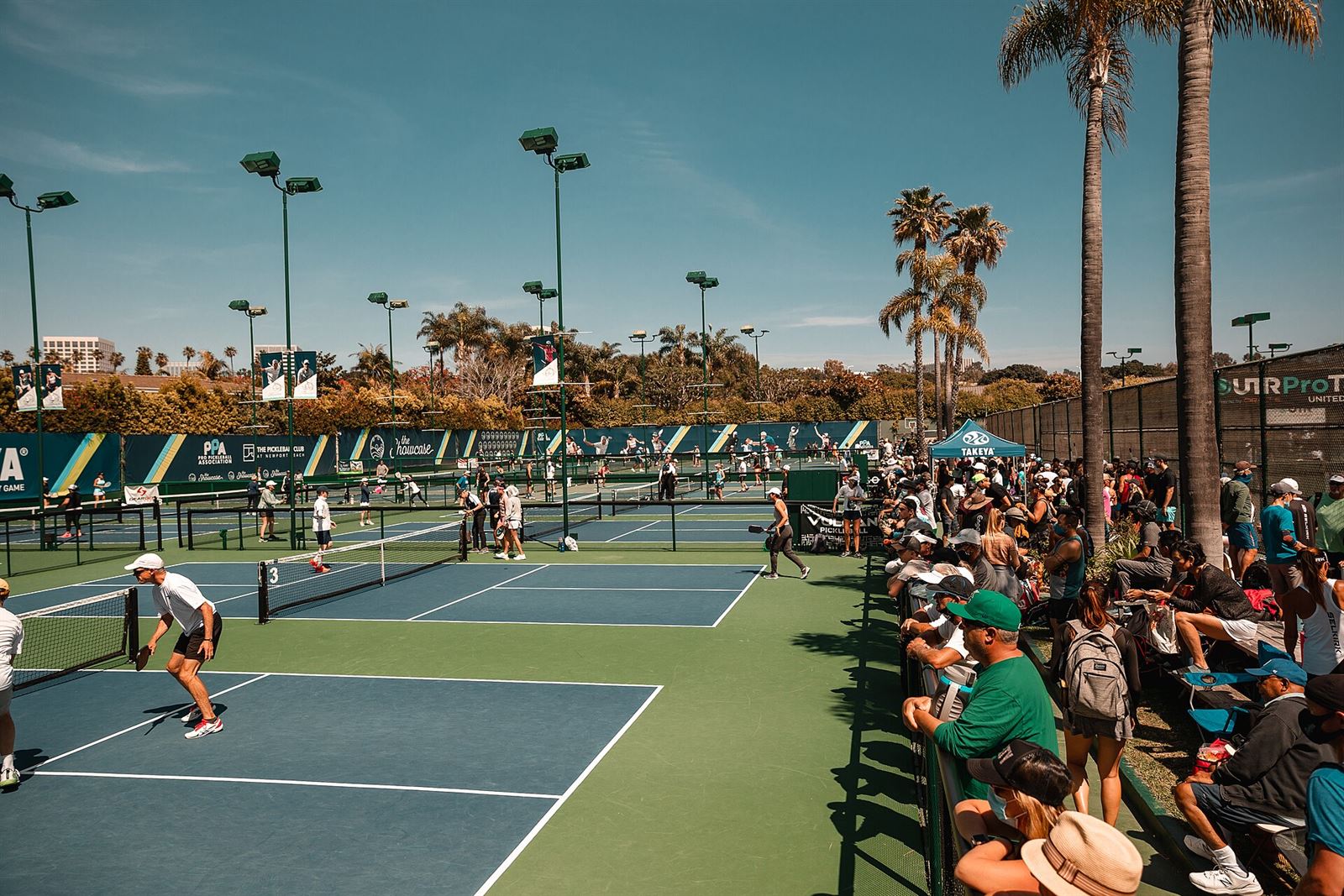
Everything you need before your first game: the court, the gear, and the four numbers that define a match. Pickleball is played on a badminton-sized court with a solid paddle and a perforated plastic ball — the non-volley zone in front of the net is what makes it pickleball rather than mini-tennis.
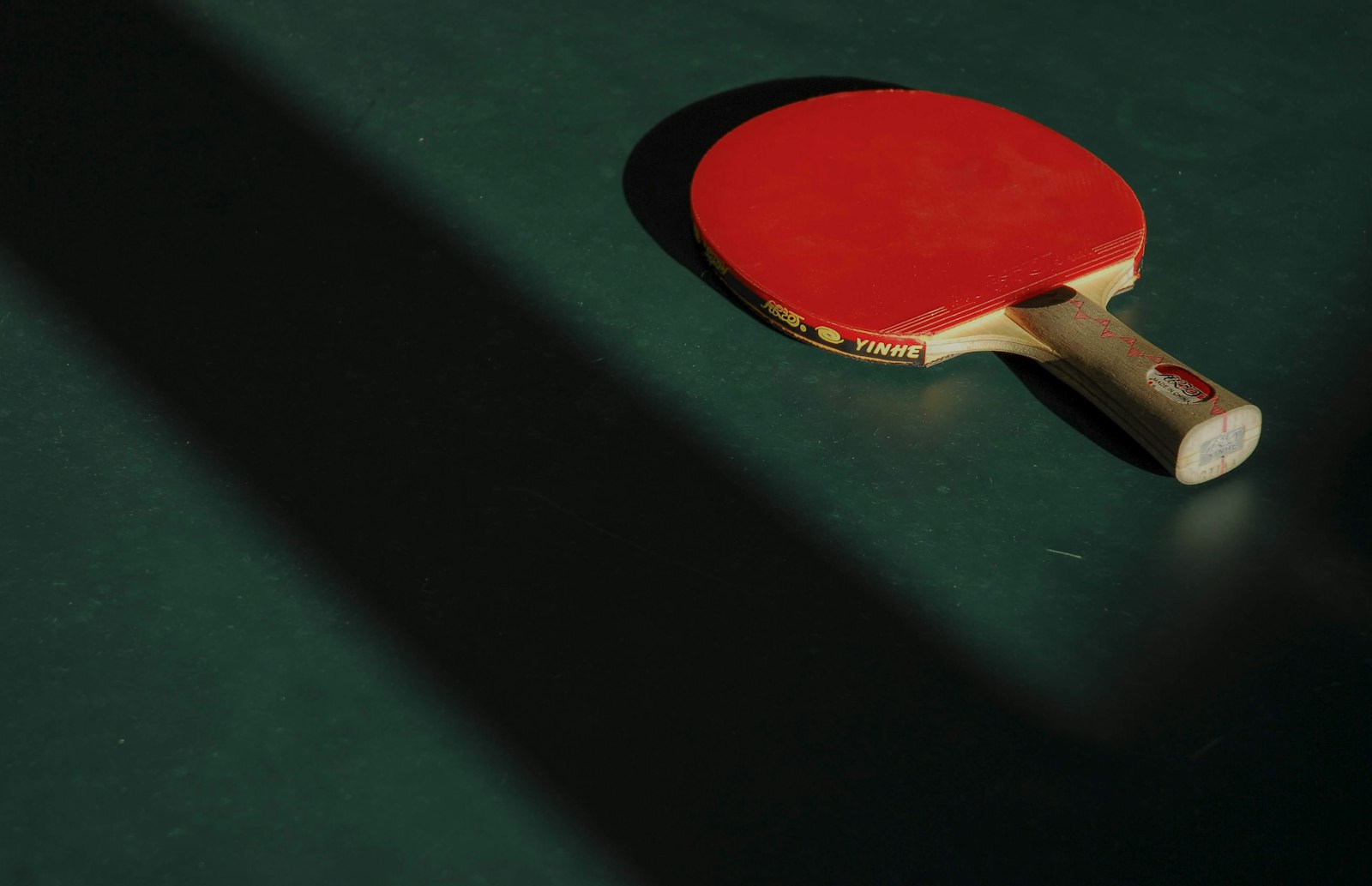
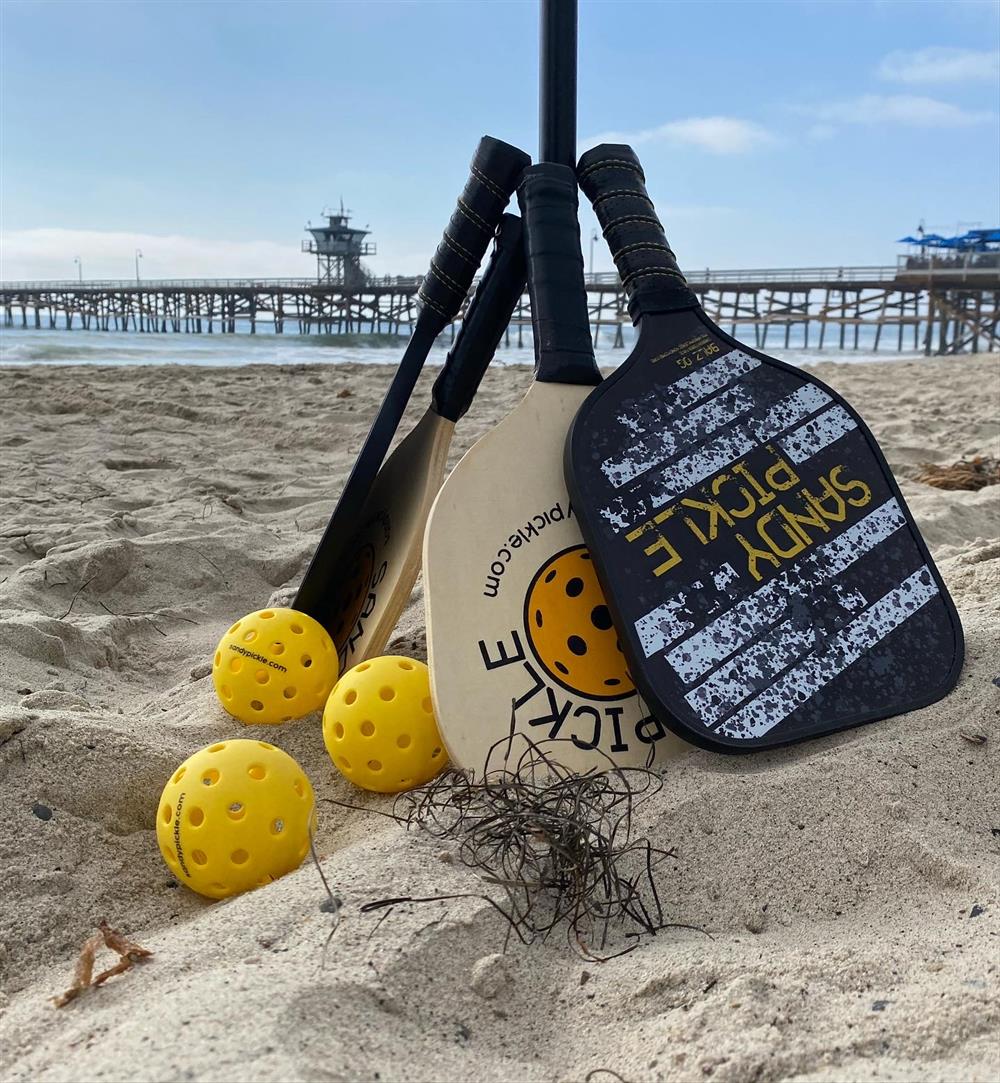
- The paddleSolid-faced, no strings — bigger than a table tennis bat, smaller than a padel racket. Composite or graphite face over a polymer core.
- The ballA perforated plastic wiffle ball. Outdoor balls are harder with 40 smaller holes; indoor balls are softer with 26 larger ones — they fly very differently.
- The shoesCourt shoes with lateral support. Running shoes roll your ankle on the quick side-to-side steps.
02How the game is played
Rally like tennis, on a court the size of badminton, with the pace of table tennis. Win the rally by landing the ball in the opponents' court or forcing an error — then keep serving, because only the serving side scores.
- Serve underhand, cross-courtOne attempt, struck below the waist, into the diagonal service box beyond the kitchen.
- Let it bounce, twiceThe return must bounce, and so must the serving side's first shot. Only then can anyone volley.
- Fight for the kitchen lineThe pair standing at the non-volley line wins most rallies. Dink softly until someone pops the ball up — then attack.
- Score to 11, win by 2Only the serving side scores. Lose the rally and you lose the serve, not a point.
Soft beats hard
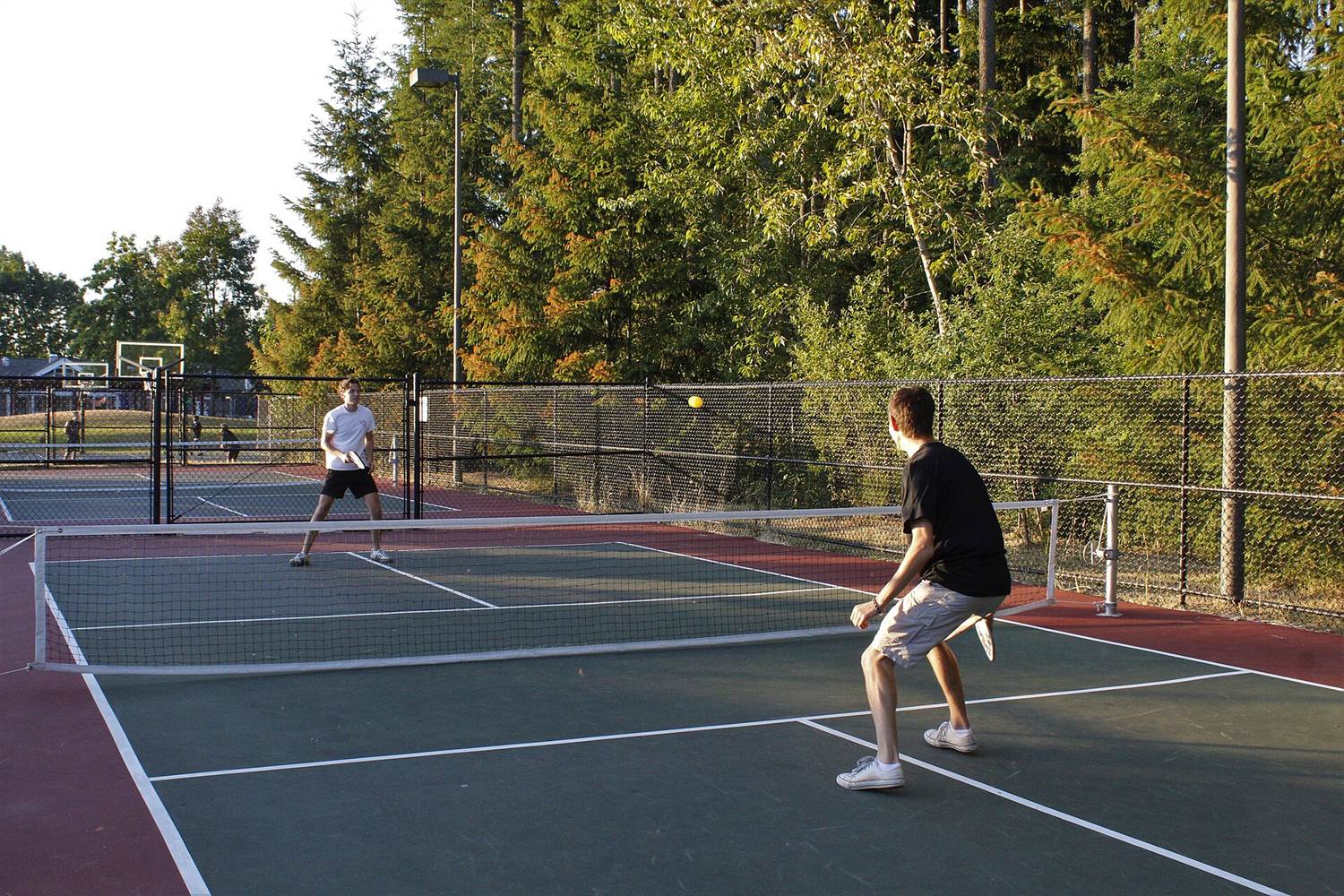
Power loses rallies at the net. The dink — a soft shot that drops into the opponents' kitchen — is the sport's signature weapon.
Learn in one session
Underhand serving and a slow ball mean genuine rallies within your first hour. That's why it's the fastest-growing sport in the world.
Call your own lines
You call the lines on your side, honestly. Spectators are never consulted — that's in the rulebook.
03The two-bounce rule, animated
Watch where each bounce must land: the serve bounces in the diagonal service box (highlighted), the return bounces anywhere on the serving side — then, and only then, volleys are allowed.
04Scoring — three numbers, one habit
- Games to 11, win by 2Tournaments sometimes play to 15 or 21 in later rounds. Matches are often best of 3.
- Only the serving side scores (classic rules)Win a rally while receiving and you don't score — you win the serve ("side-out"). Newer rally-scoring events score every rally; check your listing.
- The doubles call: "4 – 2 – 1"Server's score, receivers' score, then server number (1 or 2 — both partners serve before a side-out). Say it out loud before every serve; everyone does.
- Start of game quirkThe very first serving team only gets ONE server (the call starts "0-0-2"), softening the first-serve advantage.
05Serving — the first three shots, animated
Doubles: P1 serves diagonally past the kitchen to P3. Watch the two mandatory bounces before open play begins — this loop is the whole opening ritual of every pickleball point.
- Upward arc, below the waistArm must swing in an upward arc; contact below the waist, paddle head below the wrist. Drop serves are also legal.
- One foot behind the baselineFeet can't touch the court or the lines until after you strike the ball.
- Diagonal, past the kitchenThe serve must bounce in the diagonally opposite service box. The kitchen and its line are OUT on a serve.
- One attempt · even right, odd leftNo second serve. Your score decides the side, exactly like badminton.
06Faults — how rallies end
- A fault stops playCommitted by the receiving side, it's a point to the servers. Committed by the serving side, it's loss of serve — or a side-out.
- Most common at club levelVolleying from the kitchen, hitting the serve into the net, and forgetting the two-bounce rule. All three are below.
Volley in the zone
Touching the kitchen (or line) during a volley — before, during, or falling in after — loses the rally. The most-called fault in the sport.
Beyond the lines
Ball lands outside the court. Lines are in — except the kitchen line on a serve, which is out.
Into or under
Ball into the net, or through/under it. Touching the net or posts while the ball is live is also a fault.
Volleying too early
Smashing the serve or the return out of the air before its mandatory bounce. Instant rally loss.
One bounce max
Ball bouncing twice on your side ends the rally (this one's the same as tennis).
Paddle or wrist only
Ball hitting your body or clothing = fault. Below-the-wrist hand contact counts as the paddle.
07The official summary, point by point
Every point from the USA Pickleball official rules summary, in plain language. If a tournament desk ever quotes a rule at you, it's one of these.
Doubles or singles
Same court, same rules for both. Doubles is the most common format — less ground to cover, more strategy and communication.
Any fair method
First choice of side, serve or receive is decided by any fair method — classic version: a 1 or 2 written on the back of the score sheet.
Side-out scoring
Only the serving team scores. Games to 11, win by 2 (tournaments: 15 or 21). Rally-scoring events score every rally instead — check your listing.
Service sequence — the doubles engine
- Every side-out starts on the rightThe first serve after winning the serve back is always from the right-hand court.
- Score a point → switch sidesThe same server moves to the left court and serves again — and keeps alternating right/left while their team keeps scoring.
- First fault → partner servesServer 1 loses the serve; server 2 serves from whichever side they're standing on. No shuffling around.
- Second fault → side outThe serve passes to the opponents, who start from their right-hand court. Both of their players will get to serve too.
- The first-server exceptionAt the very start of a game, only ONE partner serves before side-out — that's why the game opens at "0-0-2".
- Singles is simplerServe from the right when your score is even, from the left when it's odd. Your score, your side.
- Position checkIn doubles, when the team's score is even, the game's first server for that team is on the right; odd, on the left. If they're not — someone's standing in the wrong box.
Line calls
Every line is IN
A ball touching any line during a rally is good — baseline, sideline, centre line, kitchen line included.
Serve + kitchen line = fault
A serve touching the non-volley-zone line is "short" — a fault. The only line in the sport that's ever out.
Baseline & sideline OK
A serve clipping the baseline, sideline or centre line of the correct service court is in. Only the kitchen line kills it.
The complete fault list
A fault stops play. By the receiving team → point to the servers. By the serving team → loss of serve (or side out).
- Serve misses the boxThe serve doesn't land within the diagonal receiving court (kitchen and its line are out on a serve).
- Into the netOn the serve or any return.
- Volley too earlyBall volleyed before it has bounced once on each side — the two-bounce rule.
- Out of boundsBall lands outside the court lines.
- Kitchen volleyBall volleyed while touching the non-volley zone or its line — including momentum carrying you in afterwards.
- Double bounceBall bounces twice on your side before you strike it.
- Net touchYou, your clothing or your paddle touches the net or net posts while the ball is in play.
- Service violationAny breach of the serve rules — above the waist, paddle head above the wrist, foot on the baseline, wrong court.
- Body hitA ball in play strikes a player or anything they're wearing or carrying (below-the-wrist paddle hand excepted).
- Permanent objectA ball in play hits the ceiling, a fence post or any permanent object before bouncing on the court.
08Quick FAQ
Pickleball vs padel — which is which?
Pickleball: open badminton-size court, plastic wiffle ball, no walls, underhand serve, singles or doubles. Padel: enclosed glass court, pressurised ball, walls in play, doubles only. Pickleball is easier on day one; padel plays more like tennis. Try both — opens for each are multiplying.
Why is it called the "kitchen"?
Nobody knows for certain — likely borrowed from shuffleboard's penalty area of the same name. The official term is non-volley zone (NVZ); nobody says that on court.
What's a "dink" and why does everyone talk about it?
A soft shot from your kitchen line that drops into theirs, too low to attack. Dink rallies are pickleball's chess: the first player to hit too high hands over a smash. Beginners who learn to dink beat bangers who only hit hard.
Indoor vs outdoor balls?
Outdoor balls are harder with smaller holes (wind resistance); indoor balls are softer with bigger holes. Tournaments specify the ball — the bounce difference is real, so warm up with the match ball.
09What's new · latest regulations
USA Pickleball updates its rulebook every January. These are the 2025 changes most likely to affect how your open is run.
Rally scoring is official
Rally scoring is now in the rulebook as an approved option — traditional side-out scoring stays the default, but tournament directors may choose rally scoring. Check your listing.
Kitchen & momentum
The volley ends when your follow-through momentum stops. Touching the kitchen before or after the volley — but not at the moment of contact — is no longer a fault.
Spectators "shall not"
Line-call wording hardened from "should not" to "shall not be consulted" — spectators stay out of calls, full stop.
★Ref Test — prove you know it
Ten questions straight from the official rulebook figures on this page. Score 80% or better to earn your badge and XP. No signup — progress saves on this device.