 Find Cricket Opens
02The objective
Cricket is played in innings. The batting team sends in two batters who score runs; the fielding team bowls and fields to dismiss them. When ten batters are out — or the overs run out — teams swap. Highest total wins.
Score runs
Hit the ball and run between the wickets, or clear the boundary for an automatic 4 or 6.
Take wickets
Bowl the batter out, or restrict scoring so pressure forces mistakes. A straight arm is mandatory — no throwing.
Beat the target
The team batting second wins by reaching the target before losing 10 wickets or running out of overs.
01The field & the basics
The action happens on the pitch — a hard 22-yard (20.12 m) strip in the middle of an oval field. Everything else is fielding territory. Figures below follow the MCC Laws of Cricket and ICC playing conditions.
- Pitch — 20.12 m longThat's 22 yards, stump to stump, and 3.05 m (10 ft) wide.
- Stumps — 71.1 cm highThree stumps spanning 22.86 cm (9 in), topped by two bails.
- Popping crease — 1.22 m in frontYour safe ground. Grounded behind it you can't be run out or stumped.
- BoundaryAlong the ground scores 4; clearing it on the full scores 6.
03Overs & innings
04Scoring runs
Run the 22 yards
Hit the ball into a gap and sprint. Each completed end-to-end crossing by both batters = 1 run.
Boundary along the ground
Ball reaches the rope after bouncing or rolling: 4 runs, no running needed.
Boundary on the full
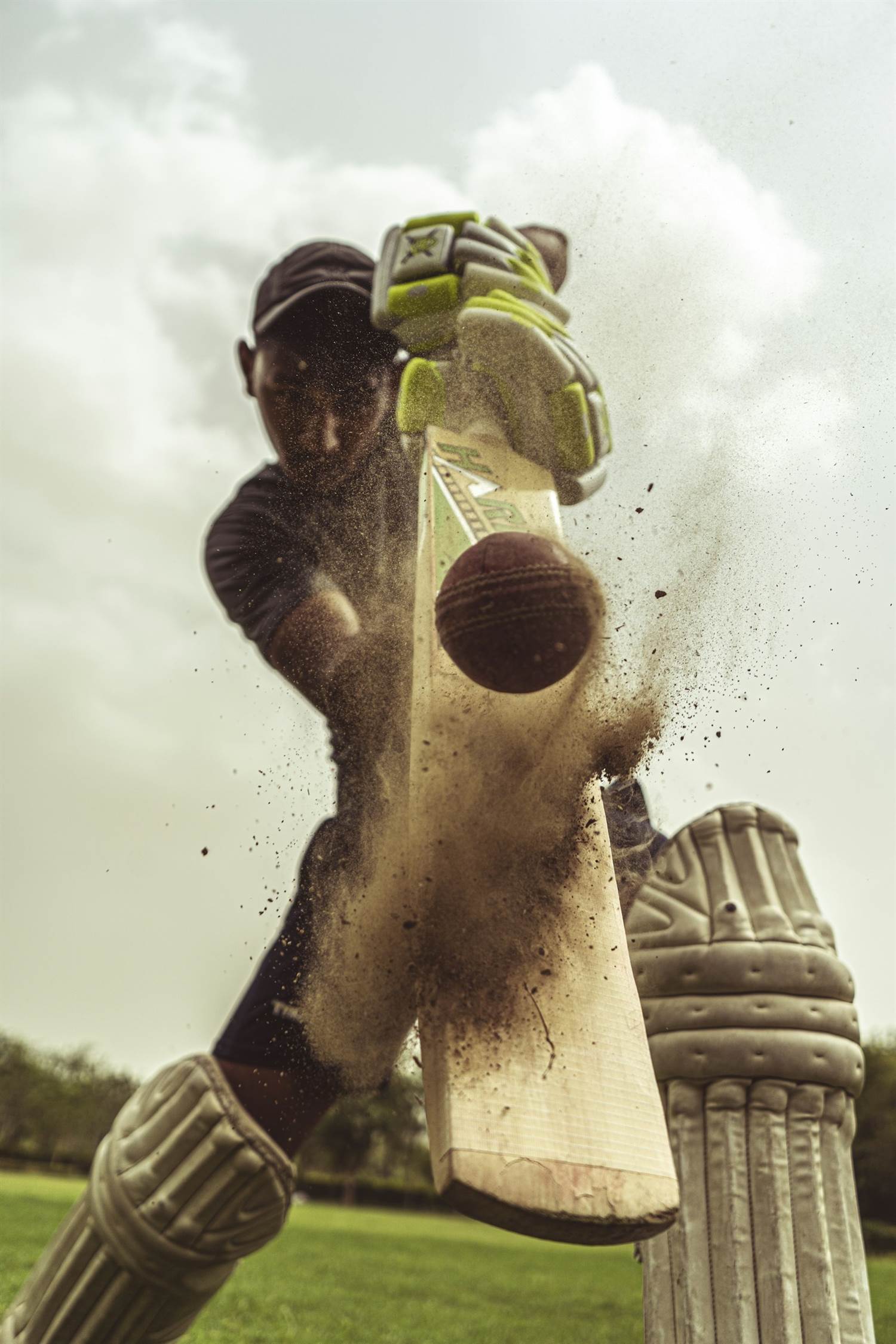
Ball clears the rope without bouncing: 6 runs. The highlight-reel shot.
Free runs
Wide (out of reach), no-ball (overstepping — next ball is a "free hit" in limited overs), byes and leg byes all add runs without the bat.
Odd runs rotate
Take 1 or 3 and the other batter faces the next ball. Ends also swap every over — strike rotation is core strategy.
50s & 100s
Individual scores of fifty (half-century) and a hundred (century) are the game's classic personal milestones.
05The ten ways out
Five account for almost every dismissal you'll ever see — the other five are trivia gold.
- BowledThe ball hits the stumps and knocks a bail off. The classic. No appeal needed — walk.
- CaughtA fielder catches the ball on the full after it touches bat or glove. Includes the keeper ("caught behind").
- LBW — leg before wicketThe ball would have hit the stumps but your pad got in the way. Key protections: pitching outside leg stump or (when playing a shot) impact outside off stump = not out.
- Run outStumps broken while you're short of the crease mid-run. Direct hits are the fielding highlight.
- StumpedYou leave your crease to swing, miss, and the keeper whips the bails off. Quick hands, quicker feet.
- The rare fiveHit wicket (breaking your own stumps), hitting the ball twice, obstructing the field, timed out (not arriving in 3 minutes), and retired out. Seeing one live is a story to tell.
06Formats you'll meet
Twenty20
20 overs a side. The open-tournament standard — corporate and weekend leagues often shrink it further to 10 or 12 overs.
One-day
50 overs a side, coloured kits, white ball. The World Cup format.
Test cricket
Two innings each, red ball, whites. The original and, purists insist, the pinnacle. Draws exist here.
07Quick FAQ
What does "appeal" mean and why is everyone shouting?
For LBW, caught-behind and stumpings the umpire only rules if the fielding side asks — that's the shout of "Howzat?!" (how's that?). No appeal, no out.
What's a no-ball vs a wide?
No-ball: the bowler oversteps the crease or bowls dangerously (a full toss above the waist). Wide: the ball is out of the batter's reach. Both cost one run and the delivery is re-bowled; in T20/ODI a no-ball also makes the next delivery a free hit — the batter can't be bowled, caught or LBW off it.
How can a match be a tie AND a draw?
A tie means both teams finished with exactly equal runs — extremely rare. A draw (Tests only) means time ran out before a result. T20 ties are settled by a Super Over: one extra over each, most runs wins.
What gear do I need for a weekend tournament?
Teams usually share pads, gloves and helmets; bring your own if you can. A helmet is non-negotiable against a hard ball. Tennis-ball cricket — huge in India — needs no protective gear at all.
08What's new · latest regulations
The ICC refreshed its playing conditions across formats in mid-2025. Most affect the pro game, but the spirit trickles down to serious league cricket too.
Stop clock in Tests
The fielding side must start the next over within 60 seconds. Two warnings, then a 5-run penalty for every further breach — the clock finally comes for slow over-rates.
One ball from over 34
After the 34th over the bowling side picks one of the two balls to finish the innings — a deliberate nudge to bring reverse swing back.
Saliva ban stays
Shining the ball with saliva remains banned, but umpires no longer automatically change the ball if it's used.
Concussion subs named early
Teams now pre-name five like-for-like concussion replacements before the match — one keeper, batter, seamer, spinner and all-rounder.
Wides judged at delivery
Umpires reference the batter's position at the moment of delivery, not where they shuffle to afterwards.
★Ref Test — prove you know it
Ten questions straight from the official rulebook figures on this page. Score 80% or better to earn your badge and XP. No signup — progress saves on this device.